A search for aliens that's made in the shade

Thanks for tuning back into the BeX Files!
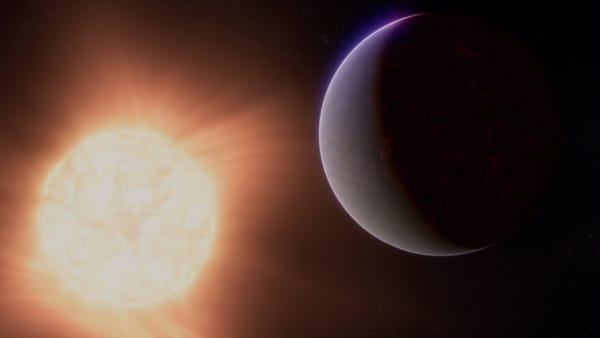
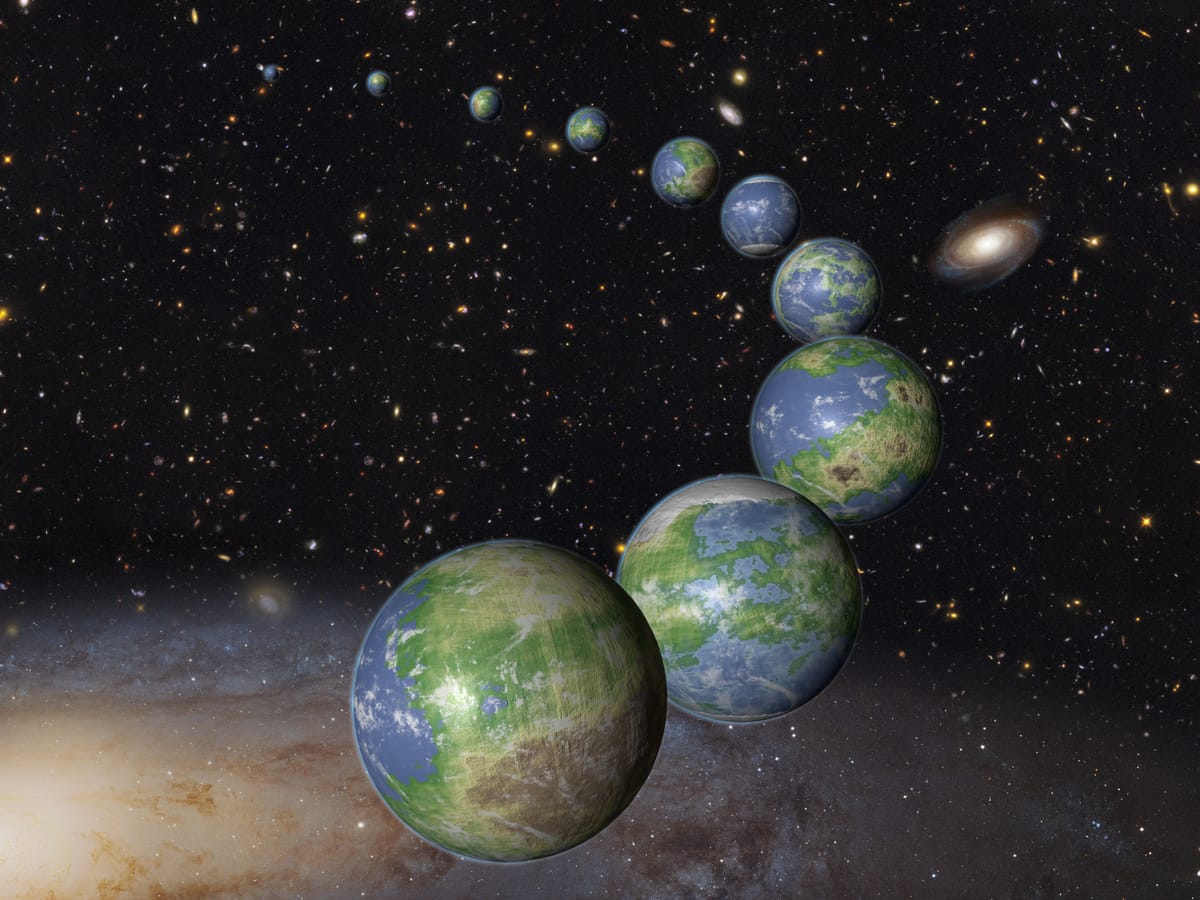
There’s no place like home, so the saying goes, but given the immensity of the universe, there are probably a lot of planets that are kind of like our home world, Earth. In a new study for Nature Astronomy, scientists present a dazzling concept that could potentially detect alien life on these nearby Earthish worlds, assuming it exists (🤞🤞🤞).
 Ahmed Soliman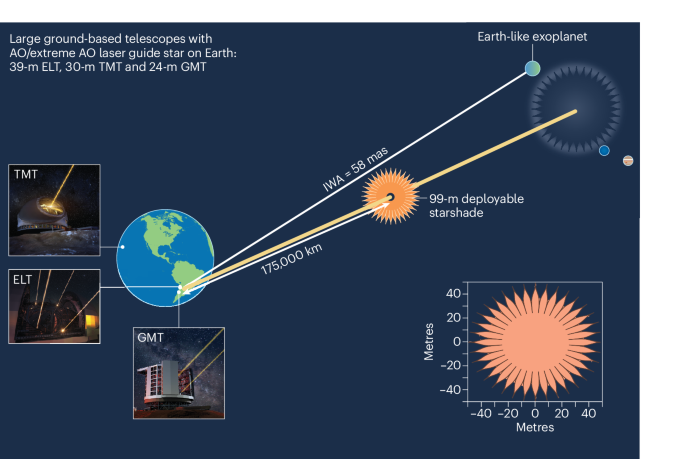
Since it's tough to spot Earth-sized worlds against the blinding glare of their stars, researchers led by Ahmed Mohamed Soliman, a scientist at NASA Jet Propulsion Laboratory and Caltech, suggest throwing some shade into space.
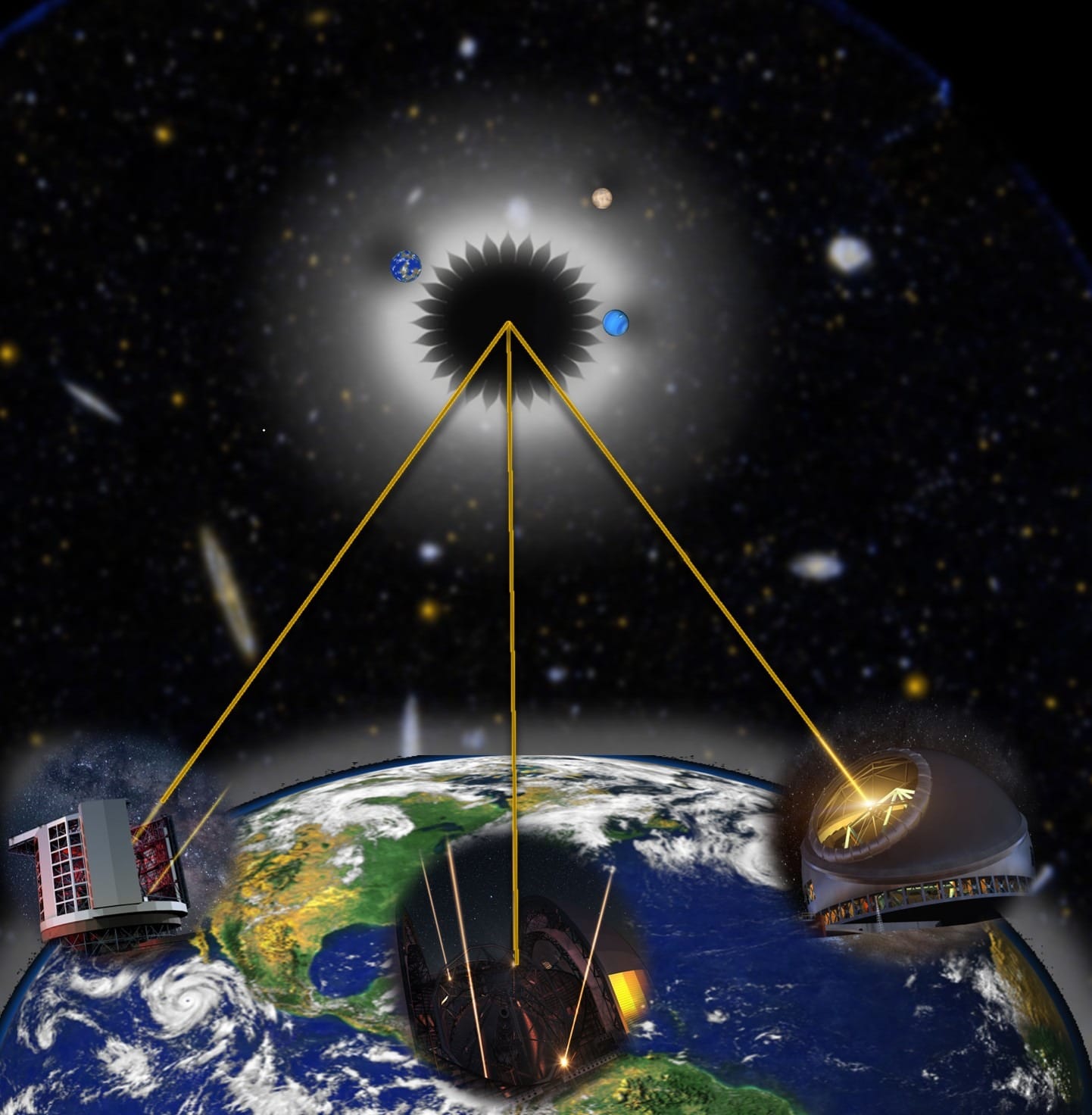
Soliman and his colleagues propose launching a 99-meter-wide starshade (or about 324 feet) out to an orbit of about 108,000 miles—roughly halfway to the Moon, a distance that would make it invisible to the naked eye. This starshade could then be lined up with next-generation mega-telescopes on the ground, such as the Extremely Large Telescope or the Giant Magellan Telescope, which are both currently in construction in Chile.
This hybrid between ground and space assets could reveal bonafide signs of life on nearby worlds like Proxima Centauri b, an Earth-sized planet in the star system next door, just over four light years away.
“Our goal would be dozens of nearby Earth-sized planets, including Proxima Centauri b,” Soliman told me over email. “The planet should lie within the star’s habitable zone, where conditions allow Oxygen and Water to exist. For a Sun-like star, this corresponds to about 1 astronomical unit (AU), the Earth–Sun distance.”
Soliman initially helped develop this concept for the NASA Innovative Advanced Concepts (NIAC) as part of a team led by the astrophysicist and Nobel laureate John Mather, who is a co-author on the new study. NIAC is an imaginative engine that funds far-out visions for space exploration (my past NIAC faves include a “Triton hopper,” a massive Moon telescope, and a Solar Gravitational Lens mission, the last of which I featured in my book First Contact).
In addition to their new study, the researchers recently earned an award from the Caltech Keck Institute for Space Studies (KISS) to develop a roadmap for implementing this advanced Earth-hunter.
The idea of using a starshade to peer at exoplanets dates back to the 1960s, but it would be a major undertaking: Soliman estimated it would take at least ten years to work through the many technical challenges of this endeavor, even if it were fully funded.
However, if this shady dream ever sees the light of day, it would be a powerful step toward resolving biosignatures or technosignatures on nearby Earth-like worlds. For example, the team notes that this hybrid approach could spot “the two strong oxygen bands at 680 nm and 760 nm are seen as a result of the Great Oxygenation Event in Earth’s atmospheric evolution, and thus are potentially the most important biosignatures.”
“This could be a breakthrough worthy of a Nobel Prize 😊,” said Soliman of the possible detection of alien life. “I believe it has the potential to transform the world in many ways.”
It’s exciting to imagine that there might be many other Earths hidden behind saturated starlight—and maybe even someone looking back at us from them.
That’s all the Earths I have to offer for now. See you at the cosmic rest stop next week.