To the habitable zone—and beyond!

Thanks for tuning back into the BeX Files! This Friday, it’s time to get in the zone—the habitable one, preferably, because I hear the alternative is literally unlivable.
As I cover in First Contact, the idea that there might be a region around stars that is most conducive to life dates back at least to the 17th century. Isaac Newton speculated about the topic in his masterpiece Principia, noting accurately that “Our water, if the earth were located in the orbit of Saturn, would be frozen, if in the orbit of Mercury it would depart at once into vapours.”
There is a direct line between this Newtonian brain-nugget and the modern concept of the “Goldilocks” habitable zone which is still largely calibrated around the odds that liquid water is present on the surface of a planet. At the same time, scientists have been arguing for broadening the boundaries of the habitable zone for decades, noting that life may emerge in unexpected environments and that planets may experience variations in habitability over time.
The newest addition to this corpus is a study by Amri Wandel of the Hebrew University of Jerusalem entitled “Exoplanets beyond the Conservative Habitable Zone. I. Habitability,” which was published in The Astrophysical Journal earlier this month. Wandel notes that the conservative habitable zone in our own solar system spans the orbits of Earth and Mars, but he suggests that it may be far more expensive both here, and in other star systems.
 Amri Wandel
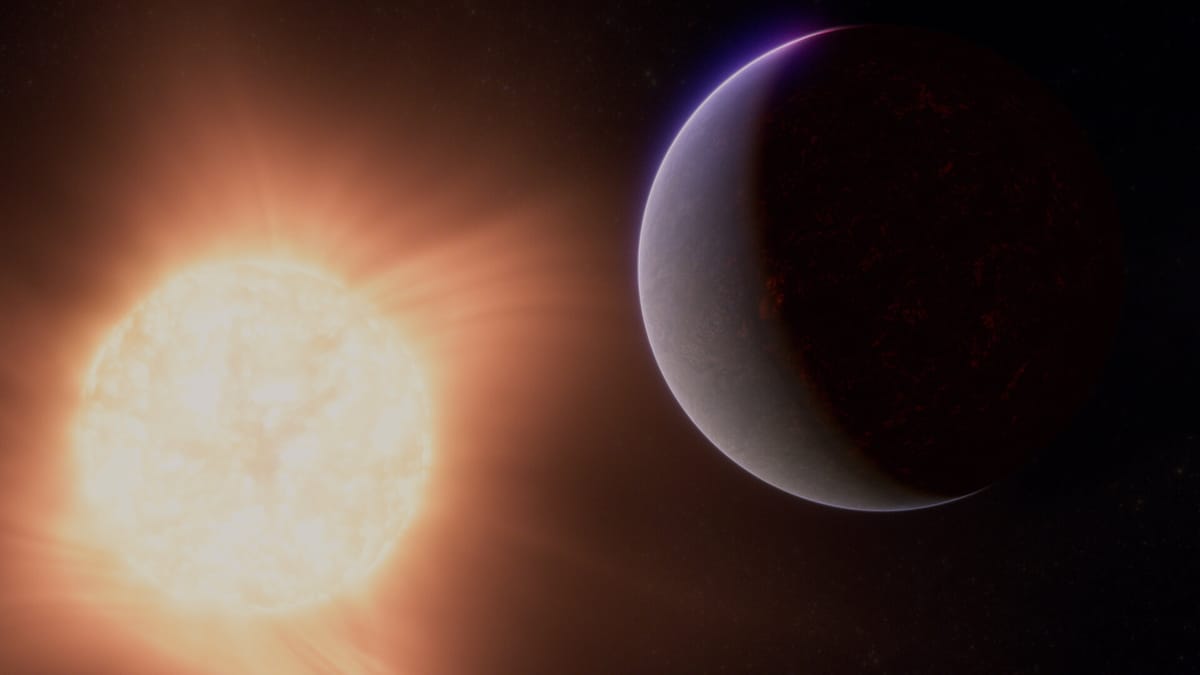
For example, the study notes that planets orbiting stars smaller than the Sun, such as orange or red dwarfs, will end up tidally locked, meaning that one hemisphere will always face their star, bathed in eternal sunlight, while the other side exists in perpetual night.
The habitability of these two-faced worlds—especially around the so-called “terminator,” which is the line between day and nightside—has been a subject of spirited debate for years. These planets also make for a great setting in science fiction (shoutout to the essential January read The City in the Middle of the Night by Charlie Jane Anders).
 Charlie Jane Anders
In the new study, Wandel points to recent observations of Super-Earths, which are planets a few times more massive than our own, that are tidally locked to their stars. The James Webb Space Telescope has captured signatures of water vapor on these worlds, hinting that they may be able to host liquid water on their nightsides.
“These findings challenge earlier assumptions and suggest that tidally locked planets may not only be common but also viable candidates for habitability, especially in the extended inner regions of the habitable zone around K (orange) and M (red) dwarfs,” Wandel writes in the study.
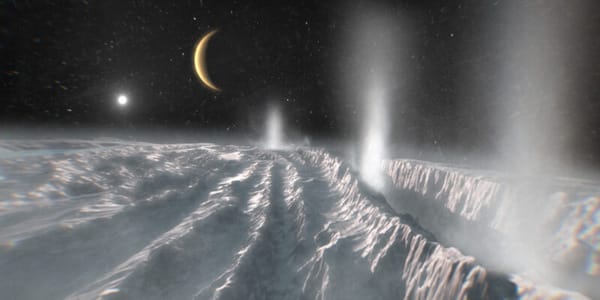
He also suggests that the habitable zone could extend outwards beyond the frost line, to include worlds like Jupiter’s moon Europa or Saturn’s moon Enceladus, both of which contain oceans of liquid water under their ice shells.
“The concept of Habitable Zone in its conservative definition— liquid water on the surface of rapidly rotating planets—is extended, considering tidally locked planets and nightside surface and subsurface water,” Wandel concludes.
This study spoke to me in particular given the weather extremes on planet Earth this January, with the Northern hemisphere shivering with freezing cold snaps as the Southern hemisphere swelters under record-breaking heatwaves. It’s like a tiny taste of life on a tidally locked world!
To sum up, some of the most promising places to look for water—and maybe life—could be environments that are forever turned away from the light, or perhaps locked in sunless seas. This doesn’t necessarily mean we will find aliens in these strange environments, but we shouldn’t rule them out either.
With that, let’s close the file for today. No matter the hemisphere you happen to be currently in, stay warm, or stay cool, or just stay ~habitable~. And see you at the cosmic rest stop next week.