Artemis II and the Space Goslings

Thanks for tuning into the BeX Files! We are t-minus one week for a possible return to the Moon, so strap in for launch.
After years of stops and starts, NASA’s Artemis II mission may actually blast off from Earth in mere days, with the earliest launch window currently scheduled for April 1 (space makes fools of us all).
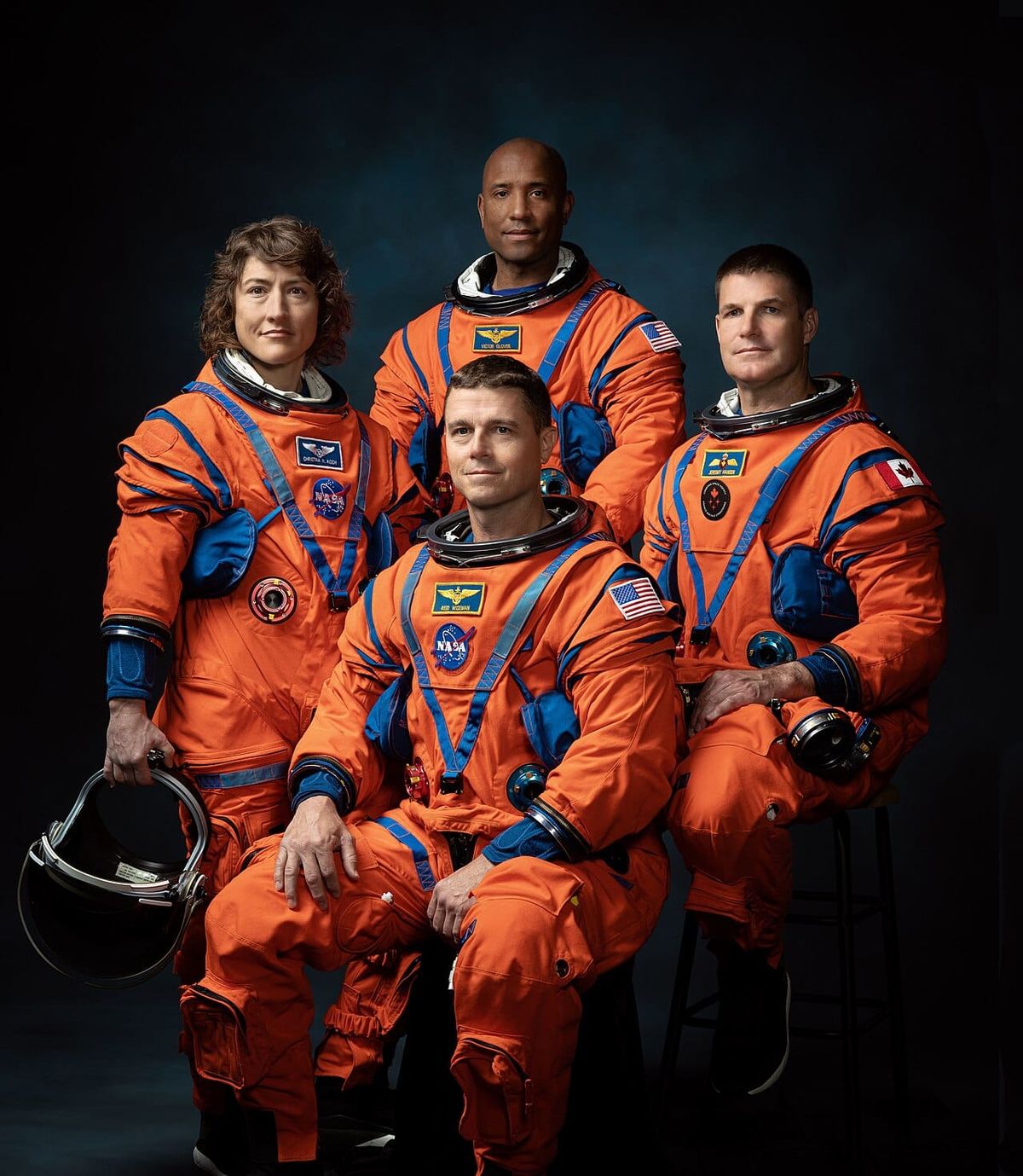
Assuming all goes to plan, the mission will bring humans back into lunar space for the first time since the Apollo era more than 50 years ago. Over the course of the 10-day trip, four astronauts will circle around the far side of the Moon, coming within about 6,000 miles of its surface. The crew members are NASA's Reid Wiseman, Victor Glover, and Christina Koch, as well as Jeremy Hansen of the Canadian Space Agency, who is probably the only Canadian that is excited to fly American right now.
Why do humans want to explore frontiers? There are snappy answers to such questions, voiced by figures like the mountaineer Edmund Hillary or President John F. Kennedy: “Because it is there” or “Because it is hard.”
There are also longer answers that can be explored through, of all things, Ryan Gosling’s filmography (bear with me!). Much has been made of Gosling playing astronauts in two iconic movies: Neil Armstrong in First Man (2018) and Ryland Grace in the new blockbuster Project Hail Mary. Gosling has said he has no interest in going to space in real life, but that he is drawn to cinematic depictions of spaceflight for the high stakes and sheer drama.
 Becky Ferreira
Indeed, both space Goslings have to deal with deadly emergencies, intense stress, and personal tragedies. But I’ve been thinking a lot about the interesting contrast in why Armstrong and Grace go to space, and what it says about our current hopes and anxieties about humanity’s off-Earth future.
Warning: There are very mild spoilers about Project Hail Mary ahead, and major spoilers about First Man (in case you didn’t hear, the Eagle has landed).
First Man is a masterpiece. It resists the classic tropes of heroism and jingoism that normally envelop Apollo 11, and depicts Armstrong as a man of great complexity that is hidden beneath a quiet demeanor.
Gosling and the film’s director, Damien Chazelle, portray Armstrong as a man who craves extremity. The film goes out of its way to make the audience feel the claustrophobia and dangers of spaceflight, including a harrowing sequence inside Gemini 8. The film’s depiction of Apollo 11’s descent and landing at Tranquility Base is spectacular and does justice to the scale of Armstrong’s achievement.
But while the success of Apollo 11 became the enduring symbol of American triumph in the Cold War, the film suggests that Armstrong was motivated less by patriotic duty and more by an impulse to escape—not just gravity, but his own grief. One scene in particular comes to mind on this point, as Gosling’s Armstrong is more afraid to look his sons in the eyes and tell them that he might never come back than he is of death itself.
Gosling’s Grace, in contrast, is very afraid of death. He does not want to leave Earth. “I put the ‘not’ in ‘astro-not,’” he says. He does not want to be brave. He does not want to sacrifice himself for a larger cause. He does not want to chase frontiers. He yearns for mediocrity, not extremity.
He is, in that way, an anti-Armstrong. But the stakes in Project Hail Mary are a little bit higher than First Man. Grace is tasked with saving life on Earth. It is not his choice to make.
The juxtaposition of these Gosling spacemen—Armstrong as willing trailblazer, Grace as reluctant hero—made me reflect on the typical justifications for sending humans beyond Earth.
The Artemis program is Apollo’s successor and the astronauts are, once again, humanity’s finest specimens, ready to risk their lives to explore new frontiers. No doubt every one of the crew has lived a life worthy of a cinematic space epic. And while the Artemis program has many goals—which seem to be constantly changing—the general thrust is that humans need to dream big about space exploration again, as we did in Armstrong’s day.
Of course, there is also an existential argument for going to space that is more in line with Project Hail Mary. For example, Elon Musk’s rationale for colonizing Mars is that we need an “insurance policy” in case Earth becomes uninhabitable. There’s a widespread belief that humans will need to settle space at some point to ensure our long-term survival. In this view, spaceflight is not just about exploration, but the perpetuation of Earth life, perhaps even beyond the lifespan of Earth itself.
My own feeling is that it would be great for humans to live in space one day but there's no rush. I am almost in disbelief to see Artemis II finally reach the launchpad after so much hub-bub, and it will be surreal to experience a human lunar mission in this century.
But I still think robotic exploration provides much better bang for our buck. It drives me crazy when people say that NASA and its partners haven't done anything bold in recent decades, despite the dozens of amazing robotic spacecraft and telescopes that have surfed the Sun, reached interstellar space, explored our neighboring planets, and peered into the dawn of the universe. Moreover, if the American public wants Apollo-level milestones, we need to be prepared to shell out Apollo-level cash. The nation opted for the exact opposite by electing Trump, who is now trying to slash NASA's budget and staff. It's an own goal of historic proportions.
With that in mind, how will our current Artemis age compare to the bygone Apollo era? We’re headed to the same Moon, but departing from a very different Earth. I hope that human space exploration progresses gradually—no more space races!—and with more input about what version of ourselves we are trying to find beyond our beautiful home world.
But for now, bon voyage to Artemis II! Say hi to the far side of the Moon for us.
I’ll be off next week in my happy place—cruising the interstate system—but I will have lots of fun news on April 10. See you at the cosmic rest stop, and safe travels to everyone on Earth, and off it.