Into the void with the most alien Earthlings

Thanks for tuning back into the BeX Files! This week, we’ll be staring into the cosmic abyss and pondering what—or who—might be gazing back.
I’m pumped to share two new articles that came out in the last week that are both about the weird grandeur of space, but from very different angles.
For WIRED, I got a chance to do a deep dive into cosmic voids, the “great nothings” of the universe, which is a subfield I’ve been following for years. Voids are the immense gaps that have opened between the filaments of the cosmic web, which is a network made of gas and dark matter that scaffolds the universe.
 Becky Ferreira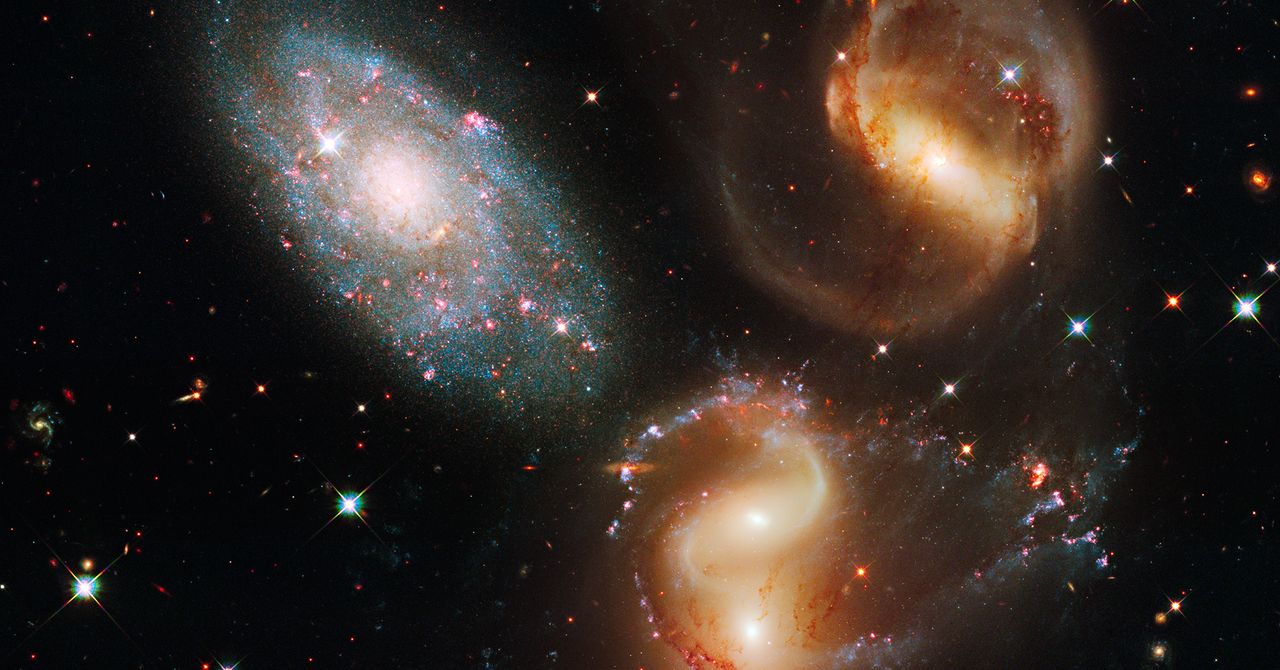
Over the course of the universe’s lifetime, matter has gravitated toward the large-scale structures of the cosmic web, causing voids to grow ever larger—and emptier—over time. The largest known voids stretch across hundreds of thousands of light years. Some scientists believe that even larger “supervoids” exist, and that our galaxy might be right smack in the middle of one, a position that may warp our perspective on the cosmos with profound consequences.
Far from cosmic dead zones, these regions are turning out to be among the sharpest lenses for studying dark energy, gravity, and neutrino physics, precisely because there's so little matter to get in the way of pristine observations. New telescope surveys have kicked off an explosion of new void discoveries, such as the Dark Energy Survey Instrument (DESI) in Arizona, and the European Euclid space telescope.
“The next decade or so of surveys that are coming up should really help us solidify our science and get more and better constraints, and really test new physics,” Nico Schuster, a cosmologist and cosmic void expert at the Centre for Particle Physics in Marseille, told me for the article. “We're currently living in the golden era of cosmology, especially for voids.”
Schuster has also designed some cool online tools for anyone hoping to wrap their heads around these scales of spacetime, and the bizarre phenomena that arise from them. Here’s one that visualizes the evolution of the cosmic web and another that simulates the trippy effects of gravitational lensing.
As a bonus, this article put the Nine Inch Nails earworm “Into the Void” on loop in my head for about a week, which was a welcome sonic trip back to 1999.
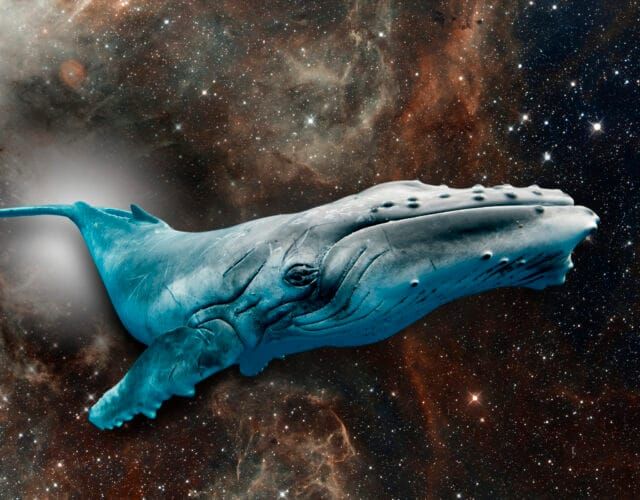
Moving on, I’m also excited to share my article for National Geographic about how the search for alien life can be informed by our fellow Earthlings, from miniature microbes to massive marine mammals. Since our sample size of life in the universe is n = 1, we may as well work with what we have.

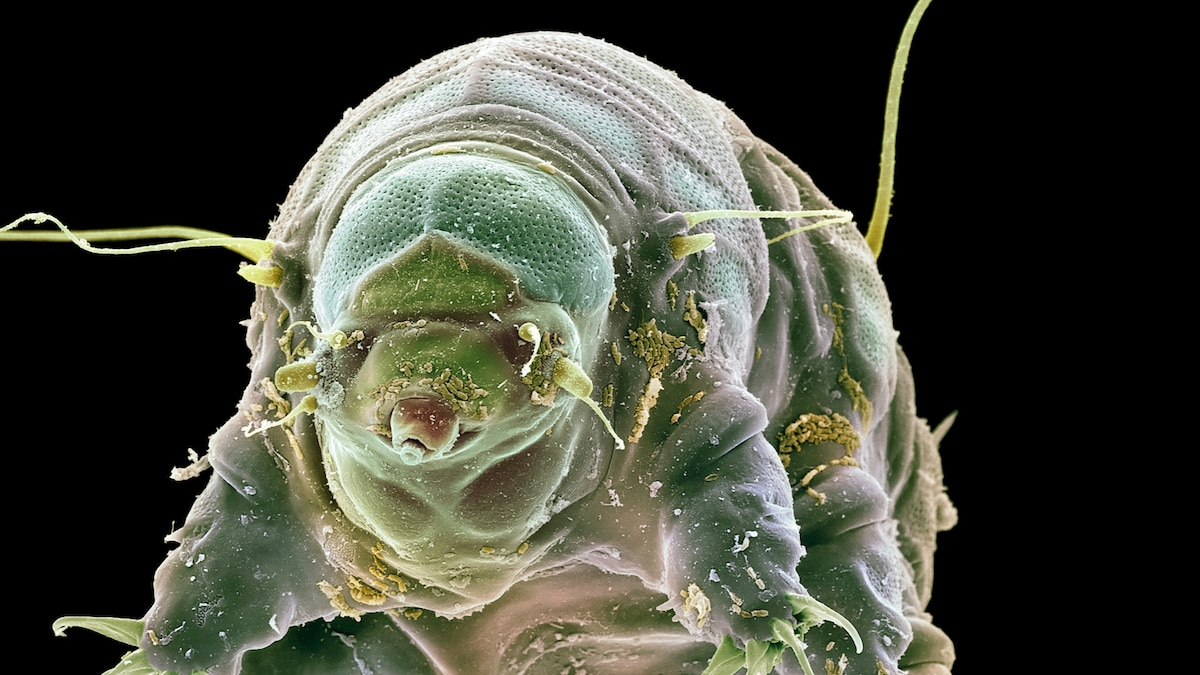
As a big fan of Earthlings, it was fun to talk to scientists of all stripes about how the inhabitants of our own planet can provide leads on what to look for elsewhere in the universe. For example, I spoke with a zoologist and a marine biologist about eavesdropping on non-human conversations, including the complex communication patterns of sperm whales, parrots, or wolves.
I also spoke to a few extremophile experts who emphasized the incredible adaptivity of microbes in harsh environments on our world. Salt-loving “halophiles” stood out to me in particular, as they can survive in salt crystals for millions of years, and could be preserved as fossils for much longer. Here’s hoping that we might one day find an alien stuck in a Martian crystal somewhere in the ancient brines of the red planet. A girl can dream!
And speaking of salty extraterrestrial microbes, I wanted to close the file today with a little teaser for the Abstract, my newsletter at 404 Media, which will have a literally splashy story on this topic that I have not seen covered elsewhere. It should be up Saturday morning.
There will be no newsletter next Friday, but I’m planning to do a special dispatch the following week about Disclosure Day. See you at the cosmic rest stop in June!