Disclosure Day arrives

Thanks for tuning back into the BeX Files! Burn your phone and go on the lam, because we are exposing government cover-ups of aliens.
That’s right: Disclosure Day is finally here. Steven Spielberg’s latest alien blockbuster is out in theaters.
My short review is: Meh. Watch Nope instead. To read more, be forewarned that this newsletter contains SPOILERS for Disclosure Day. I am going to write about WHAT HAPPENS AT THE END. Scroll down past all these Spielbergian aliens if you don’t mind being spoiled; everyone else, see ya later!


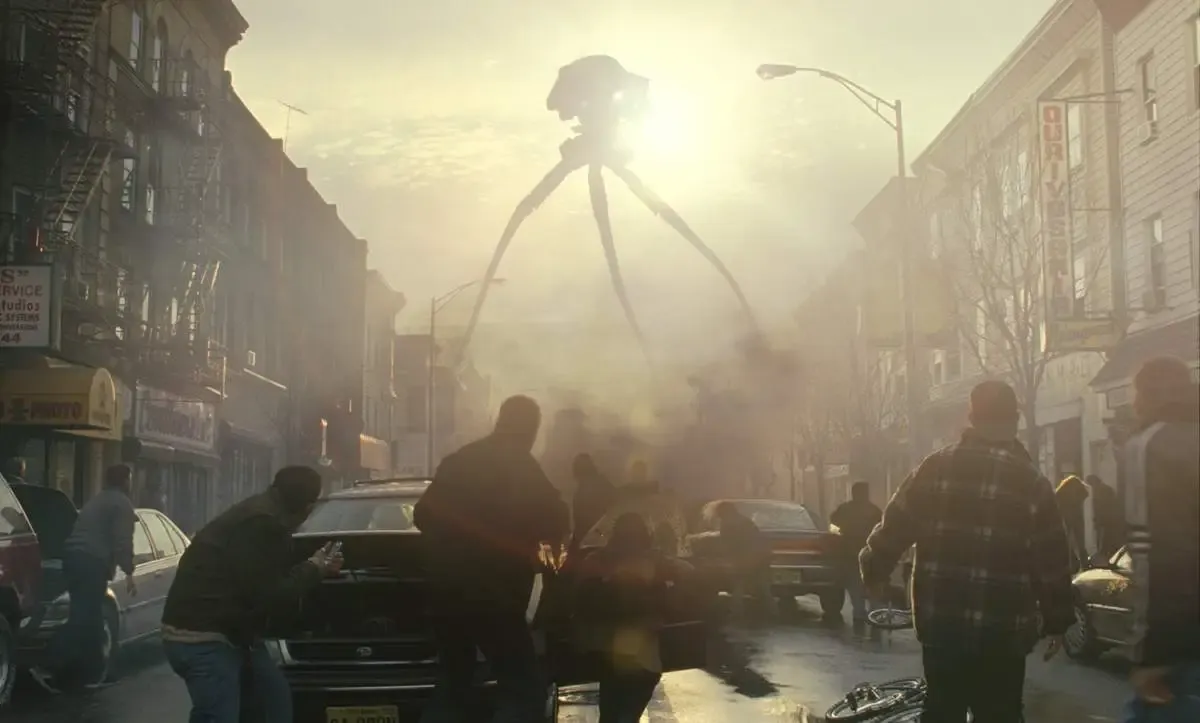

Okay, are all the spoiler-heads here and accounted for? Great! Time to spill the E-Tea.
As the title implies, Disclosure Day is an act of ufological wish fulfillment. Everything that believers have been saying for decades is true. Aliens really did crash a spaceship near Roswell, New Mexico, in the summer of 1947. Their bodies and technologies were recovered from the site in secret.
There really was a government-enabled cover-up of these alien visitations, though the movie outsources most of the blame to a corporation named Wardex. Some aliens were recovered alive and kept in containment. Spielberg even inserts the phrase “non-human biologics,” a term directly lifted from the 2023 Congressional testimony of the former U.S. intelligence officer David Grusch, who believes that the government has covered up encounters with aliens and their technologies.
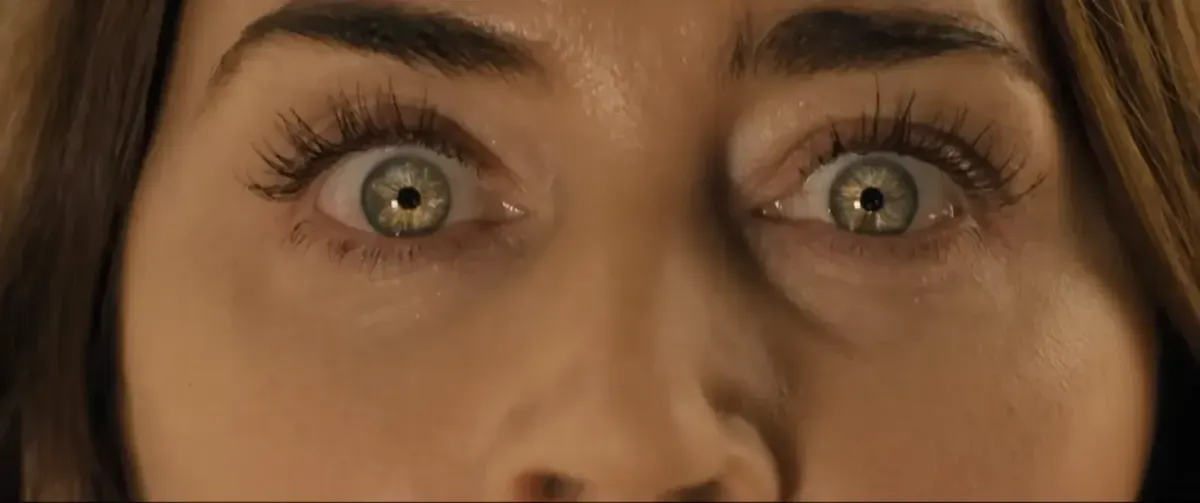
The plot follows Margaret Fairchild (Emily Blunt), a television meteorologist who is suddenly gifted with alien-derived telepathic powers, and Daniel Kellner (Josh O’Connor), a cybersecurity whistleblower hellbent on sharing the explosive footage of the aliens with the world. Margaret and Daniel spend the movie on the run from murderous Wardex goons.
First, the good: There’s a lot of classic Spielbergian action, humor, and thematic grist to the movie. This is a director who simply cannot resist having characters jump from one fast-moving object to another fast-moving object, and he remains quite talented at exercising these maneuvers.
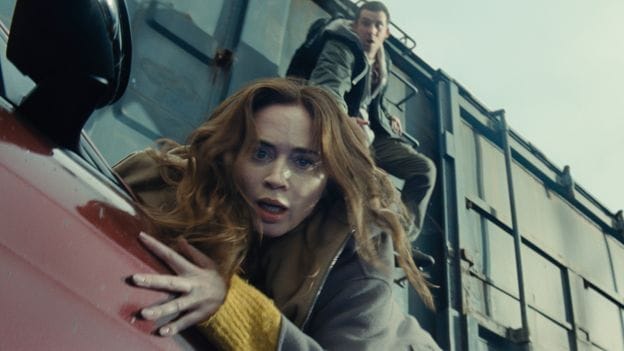
The general message of the movie is that empathy is a superpower (as well as a handy trick for getting out of a speeding ticket). Margaret is transformed into an empath who can drop directly into the experience of everyone she meets, which allows her to navigate hostile adversaries by, well, basically emotionally manipulating them. Let’s not think too hard about it.
It turns out that the aliens taught Daniel their mathematics, and gave Margaret their empathy, as these concepts are considered the pillars of their civilization. Normally, the value of empathy as a central theme of a story would come off a bit bland and obvious. But given that people are making a case against it these days—including Elon Musk, who has called empathy "the fundamental weakness of Western civilization"—I guess it needs some cheerleaders in this dark hour. Math and empathy seem like pretty good places to start for a healthy society, so no argument on that point.
Despite the best attempts of the Wardex goons to kill Daniel and Margaret, the pair make it to Margaret’s home station KCXE in Kansas City, where they unleash the big reveal. The entire world is enraptured with the special report, glued to their phones and television sets as footage of the aliens—finally REAL aliens–floods the airwaves.
Then, a surviving alien is literally wheeled onto the set, where it discloses the movie’s parting message: “Listen.” Presumably, we should listen to the aliens, but more importantly, to each other. K.
This film provides cinematic validation to the countless people who have reported strange encounters with otherworldly entities—and who have been, in many cases, unjustly stigmatized for sharing their lived experiences. In an age when declassified government files about unidentified anomalous phenomena (UAP) drop all the time, yet reveal nothing clearcut about alien visitation, Disclosure Day imagines the motherlode (or mothership), the smoking gun, the final proof that all of it is true. Enough with the blurry military footage and arcane documents. This is the good shit.
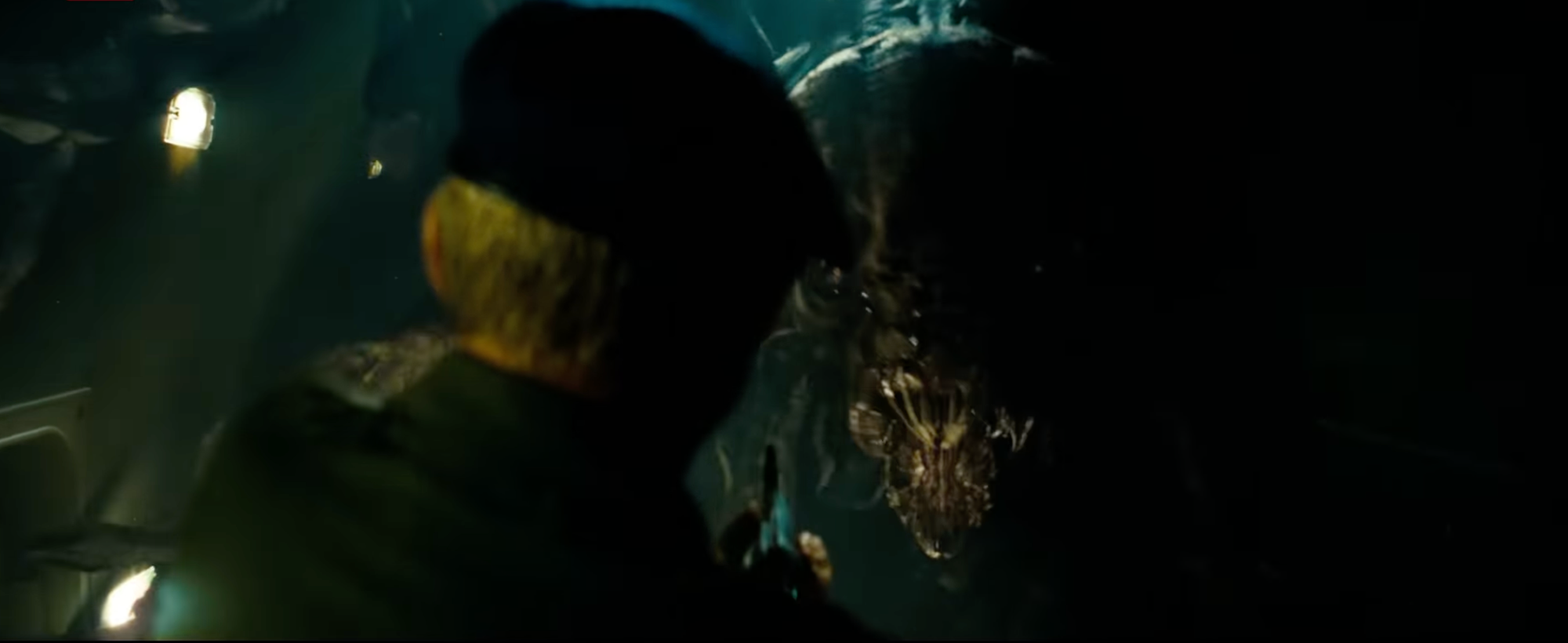
And yet, the ending fell flat for me, and the unboxing of the alien is downright goofy. It doesn’t help that it’s a classic gray alien—you know the one—and I just always get hung up on how they support those huge heads on such skinny necks.
Beyond the aesthetics, the alien epiphany felt diminished by its corporealization on screen. For decades, disclosure has served as a cultural mirage, a horizon that recedes as you approach it. Watching that mystery resolved by unveiling a gray alien on a television set felt strangely banal, as if an idea that had lived for generations in speculation and rumor could only ever disappoint once it was forced into a single physical form.
The conceit of revelatory disclosure, the secret that changes everything, reminded me a bit of the endings to the 2005 film Serenity and the 2019 BBC/HBO series Years and Years. Both close with a public airing of horrible crimes by an oppressive government—one across an interplanetary diaspora and one in a dystopian future Britain—sparking widespread outrage and backlash.
But looking back at major divulgences of the past and present, it rarely plays out so neatly. It’s not as if Galileo Galilei made his Copernican case, and then everyone was like: “COOL! Earth orbits the Sun!” People digest new information through deeply entrenched values, and to me, that is the more interesting process. Disclosure Day makes some slight feints toward these complexities, but at the end you're just left with glib interpersonal advice from an anatomically nonsensical alien.
Up top, I recommended Jordan Peele’s 2022 thriller Nope because I think it grapples with similar themes but produces a more original and nuanced conclusion (it is also an homage to Spielberg's classic alien oeuvre).
The entity in that movie, playfully named “Jean Jacket,” is a full-on monster, not the benevolent extraterrestrials depicted in Disclosure Day (or previous Spielbergian classics, such E.T. and Close Encounters of the Third Kind).
But the film plays with its own version of disclosure, of capturing the ineffable before it captures us. It ruminates on our obsession with spectacle, and what getting “the money shot” leaves out of the frame. Plus, it’s got horses. You can never go wrong with horses, in my view.
That said, I may be the outlier here, and I welcome thoughts and perspectives on Disclosure Day, or anything else. You can reach me at thebxfiles@gmail.com.
With that, let’s close the file for the (disclosure) day. See you at the cosmic rest stop next week!